
Real Estate Content Marketing: What Works for Agents and How to Run It
By Kris Reid ·Updated
Real estate content marketing is publishing useful local information, such as neighborhood guides, market updates, answers to buyer and seller questions, videos, podcast episodes and emails, so people find you and trust you before they pick an agent. For most agents it works best as a monthly plan built around one area and repurposed across every channel.
Most guides on content marketing for real estate list formats and stop. Below you’ll find what content does for an agent, the formats ranked by effort and payoff, how to set a content strategy, a calendar template you can copy, how to turn one podcast interview into a month of content, where AI fits and how to measure results. For writing craft, see our real estate content writing tips; for running a blog, see how to use a real estate blog to win leads.

What does content marketing do for a real estate agent?
Content marketing does three jobs for a real estate agent: it gets you found by people searching local questions, it shows you know the market before anyone calls you, and it gives you something useful to send your database between transactions. Ads stop when you stop paying; good content keeps working.
The search side matters most. People search very specific things: what a neighborhood is like, what homes sold for, how a local process works. Portals cover listings well but local questions badly. An agent who answers those questions with real knowledge can rank for them, show up in AI answers and be the obvious person to call.
The trust side matters almost as much. A seller choosing between three agents will read, watch or listen to whatever you’ve published. Content is your interview before the interview.
Which real estate content formats work best?
The real estate content formats that work best are the ones that answer local questions only you can answer well. The table ranks common formats by the effort they take and the payoff they usually bring for a solo agent or small team.
| Format | Effort | Payoff | Best for |
|---|---|---|---|
| Neighborhood guide | Medium, once, then yearly updates | High: ranks for area searches for years | Buyers and relocators |
| Monthly market update | Low to medium | High: email, social and search in one | Sellers and past clients |
| Answer page for one local question | Low | Medium to high: easy to rank, easy to cite | Buyers and sellers searching specifics |
| Podcast episode or interview | Medium per episode | High: becomes a post, clips, email and links | Brand, referral partners, sellers |
| Listing or neighborhood video | Medium | Medium to high on YouTube and social | Buyers, out-of-area buyers |
| Email newsletter | Low once templated | High for repeat and referral business | Past clients and sphere |
| Short social posts | Low each, high in total | Medium: reach, rarely search | Staying visible |
| Client story with permission | Low | Medium: strong proof for sellers | Listing presentations |
Generic home-buying tips rank last. Portals and national sites already cover them, and they say nothing about your market. If you write about buying a first home, make it about buying a first home in your city, with your local process, costs and timelines.
How do you build a real estate content strategy?
You build a real estate content strategy by choosing who you serve, listing the questions they ask, deciding which formats you can keep up, and setting a schedule. Keep it to one page, so you actually use it.
- Pick the audience and area. For example, move-up sellers in two neighborhoods, or relocating buyers in one county. Narrow beats broad.
- List 30 questions. Pull them from client emails, showings, your CRM notes and Google’s “People also ask” boxes. Each question is a possible page or episode.
- Choose one anchor format. A monthly market update, a neighborhood guide series or a podcast. Everything else gets cut from the anchor.
- Give each area a hub page. Every guide, update and episode about that area links to it.
- Set the cadence you can keep for a year. One anchor piece a month is enough for most agents.
Google’s guidance on people-first content asks whether your content “clearly demonstrate[s] first-hand expertise and a depth of knowledge.” That favors agents: you’ve walked the streets, seen the inspections and sat at the closings. Put that detail in.
Content marketing for real estate brands and developers
Brokerages, teams and developers use the same approach at a larger scale. A brokerage can publish a market report per office area and a hub of agent interviews. A developer can document a project from approval to move-in, with neighborhood guides for the area around it. The rule is the same: answer the questions buyers ask, with information only you have. Run every piece past your broker or marketing compliance team, since advertising rules apply to content too.

What does a real estate content calendar look like?
A real estate content calendar fits one anchor piece a month and the smaller pieces cut from it. Copy the template below into a spreadsheet and fill in your topics.
Batch the work. Record or write the anchor in one session, then cut everything else in a second. Two focused blocks a month beat thirty scattered posts.
How do you turn one podcast interview into a month of content?
You turn one podcast interview into a month of content by treating the recording as raw material: an article for your website, several short clips, a newsletter and quote posts. A 40-minute conversation holds more original, first-hand material than most agents write in a month.
The steps:
- Record a focused interview. One topic, such as how a local market changed this year, with a guest who knows it: a lender, an inspector, a builder or a past client, with their consent.
- Get a transcript. Use it as notes, not as the post.
- Write an answer-first article from the best parts, with quotes and timestamps, and embed the episode. Our guide to turning a podcast episode into a blog post shows the method step by step.
- Cut three to five clips of 30 to 60 seconds, each making one point.
- Send a newsletter with the single most useful idea and a link to the article.
- Post quote cards with the guest’s permission, and tag them so they share it.
If you’re deciding between a show and a blog, our comparison of podcast vs blog for an agent shows why the hybrid usually wins. If you’d rather not edit and publish episodes yourself, Icons ongoing podcast production handles the editing, publishing, promo clips and website articles. Disclosure: Ardor SEO and Icons of Real Estate are sister companies.
Can AI help create real estate content?
AI can help create real estate content, mainly with drafts, summaries and repurposing, but the facts, local detail and opinions need to come from you. Most agents already use it. NAR’s 2026 technology research, published September 22, 2026, found that among agents who use AI, 75% use it to write listing descriptions, 56% for social media posts and 52% for emails and follow-ups.
Use AI for the slow parts: turning a transcript into an outline, drafting social captions from an article, summarizing your MLS numbers into plain language. Then edit hard. Check every number against your MLS, take out generic phrases, and add what only you know. Google’s people-first guidance says it’s helpful for readers to know how a piece of content was produced, suggests AI or automation disclosures where readers would reasonably expect them, and flags using extensive automation to produce content on many topics as a warning sign.
Watch two risks. AI tools invent facts, including local ones. And AI copy can slip into describing who a neighborhood is “perfect for,” which can raise Fair Housing problems. Describe places, not people, and check with your broker.
How do you measure real estate content marketing?
You measure real estate content marketing by checking whether people find it, whether they act on it and whether it turns into clients. Three tools cover this, and a quarterly review is enough. Our ranked list of real estate marketing tools covers the CRM, email and video tools mentioned here.
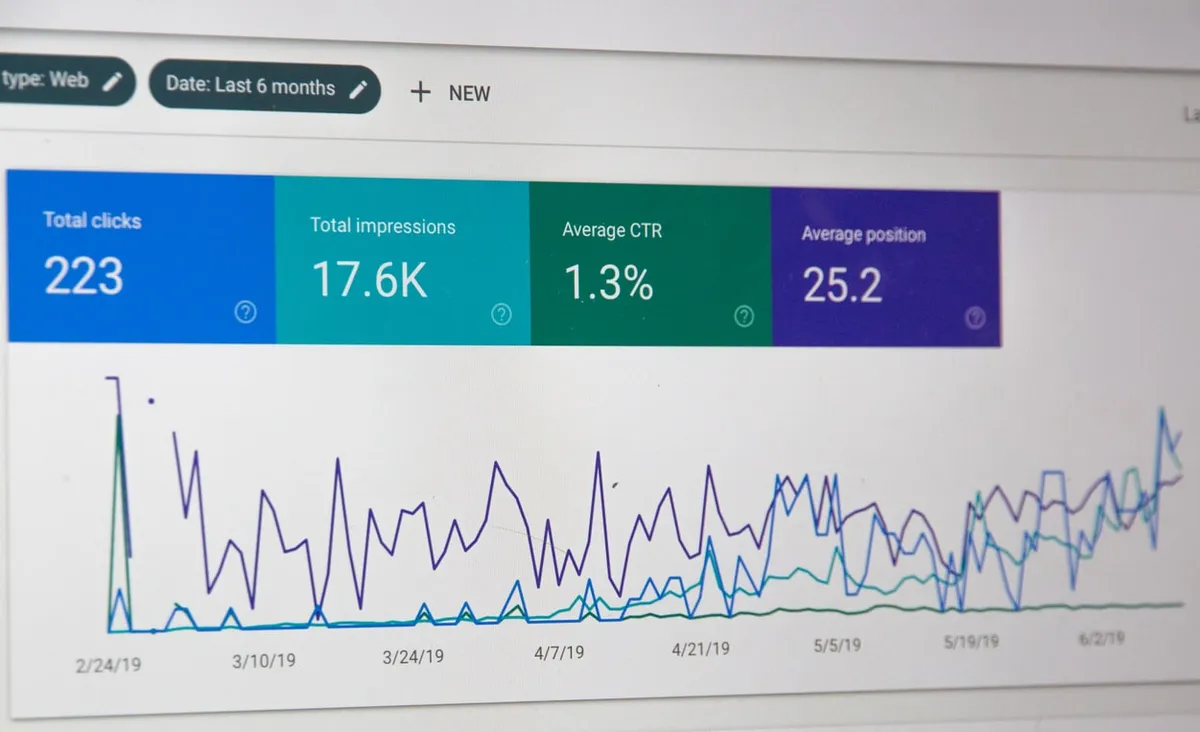
- Search Console. The Performance report shows clicks, impressions, average position and the queries that bring people to each page. Look for pages gaining impressions and queries you haven’t answered yet.
- Your analytics. Track form submissions, calls and newsletter sign-ups as key events, and see which pages they started on.
- Your CRM. Record the source of every lead and every closed deal. “Found your neighborhood guide” is the result that matters.
A quarterly checklist:
- Which three pages gained the most impressions, and can they be improved?
- Which queries appear in Search Console that no page answers well?
- Which pages started the most inquiries?
- How many leads and closings list content, the podcast or the newsletter as their source?
- Which format took the most time for the least result? Cut or change it.
If your content includes podcast appearances on other shows, our guide to tracking podcast guest appearances in GA4 and Search Console shows how to measure those too.
Sources
- Creating helpful, reliable, people-first content, Google Search Central (accessed October 15, 2026)
- Performance report (Search results), Search Console Help (accessed October 15, 2026)
- The Tech Real Estate Agents Rely on Most in 2026 (September 22, 2026), National Association of REALTORS® (accessed October 15, 2026)
Frequently asked questions
How often should a real estate agent publish content?
Publish on a schedule you can keep for a year. For most solo agents that is one substantial piece a month, such as a neighborhood guide or market update, plus a weekly email or social post drawn from it. Consistency matters more than volume.
Is content marketing worth it for a new real estate agent?
Yes, if you pick a narrow area. A new agent can't outrank portals for broad searches, but can own pages about one or two neighborhoods and the questions people there ask. Those pages keep working while you build your database.
Should a real estate agent write their own content?
You should supply the knowledge and opinions; someone else can shape the words. Google's guidance values first-hand expertise, so the facts, local detail and examples need to come from you, even if a writer or editor turns them into the final post.

Founder & CEO, Ardor SEO; Co-Founder & CEO, Icons of Real Estate
Kris Reid founded Ardor SEO in 2010 after a career in software engineering with major banks. He co-founded Icons of Real Estate, a podcast network for real estate professionals, and has been a guest on more than 100 podcasts.